Binding Agents Masterclass Day 3: Encaustic: Wax, Heat, Resin, and the Paint Film That Never Truly Dries
Encaustic: Wax, Heat, Resin, and the Paint Film That Never Truly Dries
Binding Agents Masterclass Day 3 • The Chemistry of Binding Agents: From Egg Tempera and Linseed Oil to Modern Acrylic Polymers
Egg tempera is a binder of discipline: thin strokes, dry surfaces, and patient optical building. Encaustic is its hot-blooded cousin. It asks the painter to think with heat. Pigment is not suspended in drying oil or egg yolk, but in wax: a thermoplastic material that becomes workable when warm and solidifies as it cools. That single difference changes everything: handling, equipment, studio safety, surface, texture, repair, and long-term vulnerability.
1. What Encaustic Is, Chemically
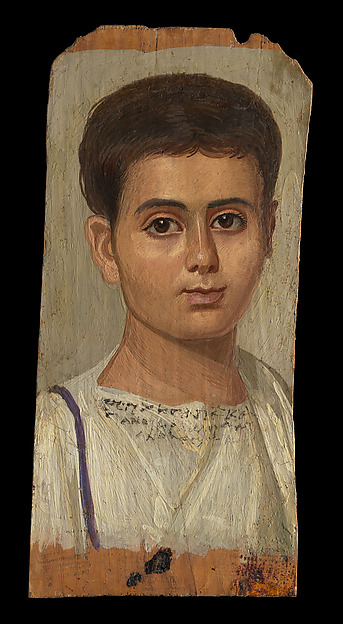
In encaustic painting, coloured pigment is held in wax. The Metropolitan Museum of Art explains that for the Roman Egyptian mummy portraits, “encaustic” has come to mean a painting method in which pigment is mixed with beeswax, even though the historical term, Greek for “burnt in,” can be misleading because heat was not always required for every ancient effect. For the studio painter, however, modern encaustic usually means a heated wax medium applied to a rigid surface and fused between layers.
Wax does not dry like oil, and it does not coalesce like acrylic. It changes state. Warm it and it softens or melts; cool it and it hardens. This makes encaustic unusually immediate: a stroke can freeze almost as soon as it touches a cooler surface. It also means the finished film remains heat-sensitive. A painting made of wax can be stable under sensible conditions, but it should not be treated like an oil painting that has chemically cured into a crosslinked network.
2. The Ancient Anchor: Roman Egyptian Mummy Portraits
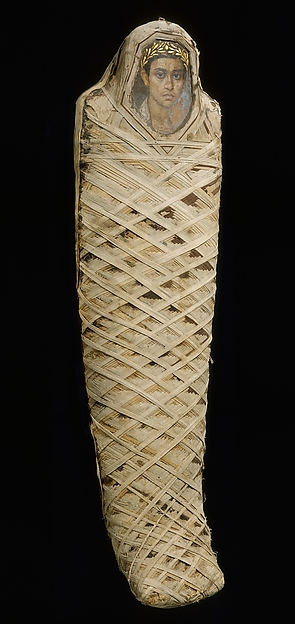
The most famous ancient encaustic survivors are the Roman Egyptian mummy portraits, often called Fayum portraits. The Met describes the portraits as flourishing from the first to third century A.D. and explains that the exhibition tradition distinguishes techniques including encaustic and tempera on wood panels. The British Museum’s collection record for a mummy portrait excavated at Hawara identifies wax as the material and encaustic as the technique.
These portraits are not just art-historical curiosities. They teach a material lesson. Wax can hold high chroma, visible brush and tool marks, and a surface that feels closer to oil in body than to egg tempera. The Met notes that encaustic mummy portraits can resemble oil painting to modern viewers because wax can be applied in thick layers with varied tool marks and free brush strokes.
3. The Modern Anchor: Jasper Johns and the Return of Wax
Encaustic did not remain only an archaeological medium. In the twentieth century, Jasper Johns made it newly visible. MoMA lists Johns’s Flag, 1954-55, as encaustic, oil, and collage on fabric mounted on plywood. MoMA’s label explains that Johns used a cut bedsheet, oil paint, and encaustic; he dipped strips of cloth and newsprint into hot wax and attached them to the surface. The result mattered because process remained visible: wax preserved the embedded fragments, ridges, and worked surface.
For a painter, Johns is a reminder that encaustic is not only about ancient technique. It is also a construction medium. It can bind pigment, embed paper, trap texture, and make a surface where collage and painting become physically inseparable.
4. Pros and Cons
| Strengths | Limitations |
|---|---|
| Immediate setting as wax cools; excellent for layering and texture. | Requires heat, ventilation awareness, and careful studio setup. |
| Can be polished, scraped, incised, fused, embedded, and reworked. | Heat-sensitive after completion; avoid hot storage, cars, radiators, and direct summer sun. |
| Excellent for luminous depth, collage, relief-like surfaces, and tool marks. | Best on rigid absorbent panels; flexible supports are risky unless specifically engineered. |
| No long oxidative curing stage like drying oil. | Not ideal for fine soft blending unless the painter controls heat and timing very carefully. |
5. Practical Studio Application
A sensible modern encaustic workflow begins with a rigid support, a compatible absorbent ground, a controlled heated palette, and small amounts of pigmented wax. Paint is applied warm, then fused with controlled heat so each layer bonds to the previous layer. Fusing is not decoration; it is structural. Without adequate fusion, layers can remain mechanically separate.
Best uses include textured abstract painting, collage, embedded papers, luminous veils of colour, incised line, and works where the surface is meant to record the act of making. It is less suited to casual kitchen-table painting because heat tools, molten wax, and fumes require a deliberate studio setup.
6. Drying, Curing, and Acceleration
Encaustic does not need an accelerator in the way oil paint might. Its working change is physical: molten or softened wax cools and becomes solid. You can speed that by working thinly on a cool panel, but the more important skill is not acceleration; it is fusing. The goal is a coherent layered object, not merely a stack of chilled wax skins.
You can slow the working time by warming the support slightly, keeping tools warm, or working near the heated palette, but overheating introduces risk. Excess heat can cause bloom, movement, sinking, loss of detail, or fire/safety hazards. Heat control is the craft.
7. Common Mistakes
- Thinking encaustic “dries” like oil or acrylic. It cools, and it remains heat-responsive.
- Using flexible supports without understanding the mechanical risk.
- Failing to fuse layers, leaving weak interlayer adhesion.
- Overheating the surface and losing intended marks or causing wax movement.
- Ignoring ventilation and studio safety because wax feels natural or traditional.
Key Takeaways
- Encaustic is pigment in wax: a thermoplastic binder system.
- Its great power is surface: texture, luminosity, embedding, scraping, and reworking.
- Roman Egyptian mummy portraits and Jasper Johns’s Flag show two very different high points of the medium.
- The main studio question is not “How do I make it dry faster?” but “How do I control heat and fuse layers safely?”
Sources
- The Metropolitan Museum of Art, “Ancient Faces: Mummy Portraits from Roman Egypt”: https://www.metmuseum.org/en/exhibitions/listings/2000/mummy-portraits
- The Metropolitan Museum of Art, Portrait of the Boy Eutyches, object 18.9.2: https://www.metmuseum.org/art/collection/search/547951
- The Metropolitan Museum of Art, Mummy with an Inserted Panel Portrait of a Youth, object 11.139: https://www.metmuseum.org/art/collection/search/547697
- British Museum, mummy portrait EA74713, technique and material record: https://www.britishmuseum.org/collection/object/Y_EA74713
- The Museum of Modern Art, Jasper Johns, Flag, 1954-55: https://www.moma.org/collection/works/78805
- Whitney Museum of American Art, Jasper Johns artist page: https://whitney.org/artists/653
Comments
Post a Comment